“But the simple fact is that we have not yet found extraterrestrial life. If I had to guess—especially considering our long sequence of failed chauvinisms—I would guess that the Universe is filled with beings far more intelligent, far more advanced than we are.”
— Carl Sagan, Pale Blue Dot
The Silence of the Cosmos
The universe has had nearly 14 billion years to create intelligent life.
Humanity has existed for only a tiny fraction of that time.
If other civilizations emerged millions, or even billions, of years before us, they should be everywhere. Their technologies should be visible. Their presence should be obvious.
Instead, the cosmos appears silent.
No confirmed signals.
No alien spacecraft.
No evidence of an advanced civilization.
This is the Great Cosmic Mystery.
If the universe should be full of life, where are the aliens?
More than seventy years ago, physicist Enrico Fermi posed a similar question during a casual conversation with colleagues. The question eventually became known as the Fermi Paradox: If intelligent life should be common throughout the universe, where is everybody?
What Counts as Intelligence?
Before searching for intelligent life, we should ask a more fundamental question: What exactly counts as intelligence?
Humans often imagine alien civilizations as technologically advanced beings capable of building spacecraft and communicating across the stars. But intelligence exists in many forms on Earth. Ant colonies, for example, construct complex underground cities, coordinate large populations, divide labor among specialized roles, wage territorial conflicts, and solve problems collectively. Yet no individual ant understands the entire colony.
If we discovered a planet inhabited by ant-like organisms, would we consider that intelligent life? What if those creatures had developed forms of communication, cooperation, or social organization unlike anything found on Earth?
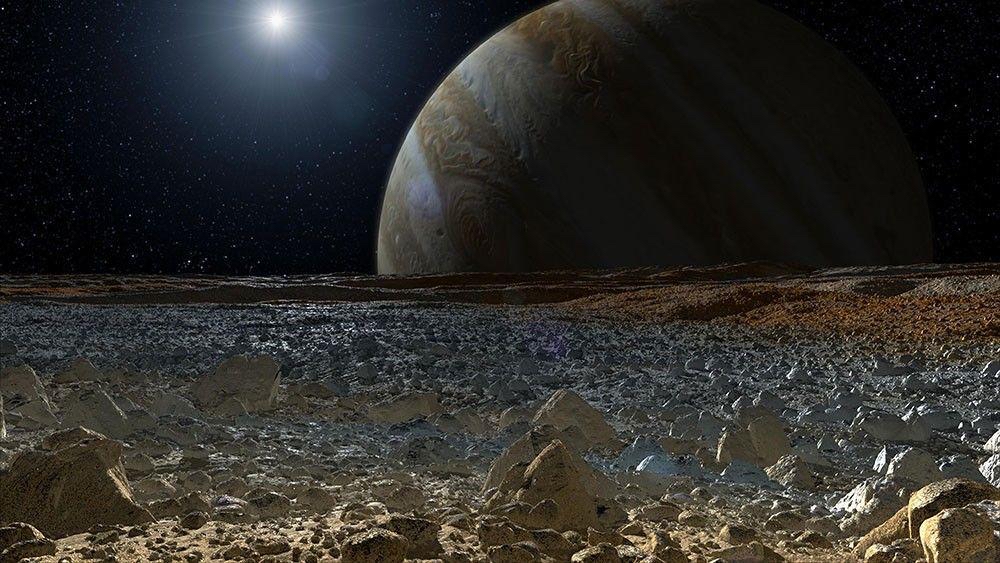
The search for extraterrestrial life is not necessarily a search for another humanity. It may be a search for entirely different forms of intelligence—some more advanced than our own and others far simpler. Even the discovery of a microscopic organism beneath the ice of Europa would prove that life emerged independently elsewhere in the universe, a finding that would forever change humanity’s understanding of its place in the cosmos.
Life Finds a Way
Scientists once believed life could only survive in environments similar to Earth’s surface. That assumption changed with the discovery of extremophiles. Extremophiles are organisms that thrive in conditions once thought too hostile to support life, including deep-sea hydrothermal vents, frozen polar ice, highly acidic lakes, and environments exposed to intense pressure or radiation.
The discovery of extremophiles transformed the search for extraterrestrial life. If life can survive in some of Earth’s most extreme environments, perhaps life elsewhere in the universe is equally adaptable.
Imagine a planet shrouded in dense clouds of unfamiliar gases, with temperatures and atmospheric conditions that would be deadly to humans. For decades, scientists might have dismissed such a world as lifeless. Yet an alien organism that evolved under those conditions could view that environment the same way humans view Earth. Just as life on our planet adapted to oxygen, water, sunlight, and countless environmental pressures, life elsewhere may have adapted to conditions entirely different from our own.
This realization expanded the search for life beyond Earth. Rather than focusing solely on planets that resemble Earth, scientists now investigate a wide range of environments, from icy moons hidden beneath frozen crusts to distant exoplanets orbiting other stars.
Artificial Intelligence Joins the Hunt
Artificial intelligence is becoming an increasingly important part of the search for life beyond Earth. While many people imagine AI as a humanoid robot, today’s AI systems are more often found inside powerful computer networks that analyze enormous amounts of scientific data. Modern observatories generate far more information than human researchers can review on their own. AI can help identify unusual patterns, filter out false signals, and search for clues that might otherwise go unnoticed.
Yet the future may look very different. Imagine a robotic explorer operating on the frozen surface of Europa or navigating the methane-rich environment of Titan. Equipped with advanced sensors and artificial intelligence, such a machine could make decisions, conduct experiments, and transmit discoveries back to Earth without waiting for human instructions. Future observatories may also use AI to analyze the atmospheres of distant exoplanets, searching for subtle chemical signatures that could indicate life.
Whether AI remains inside computer systems or eventually takes the form of autonomous robotic explorers, it is likely to become one of humanity’s most important partners in the search for life beyond Earth.
If we hope to solve the great cosmic mystery, we will likely need technologies that do not yet exist. Just as missions like Galileo, Voyager, Cassini, and Juno transformed our understanding of the Solar System, future generations of observatories, robotic explorers, and AI-powered systems may revolutionize our search for life among the stars.
The James Webb Space Telescope: A New Eye on the Cosmos
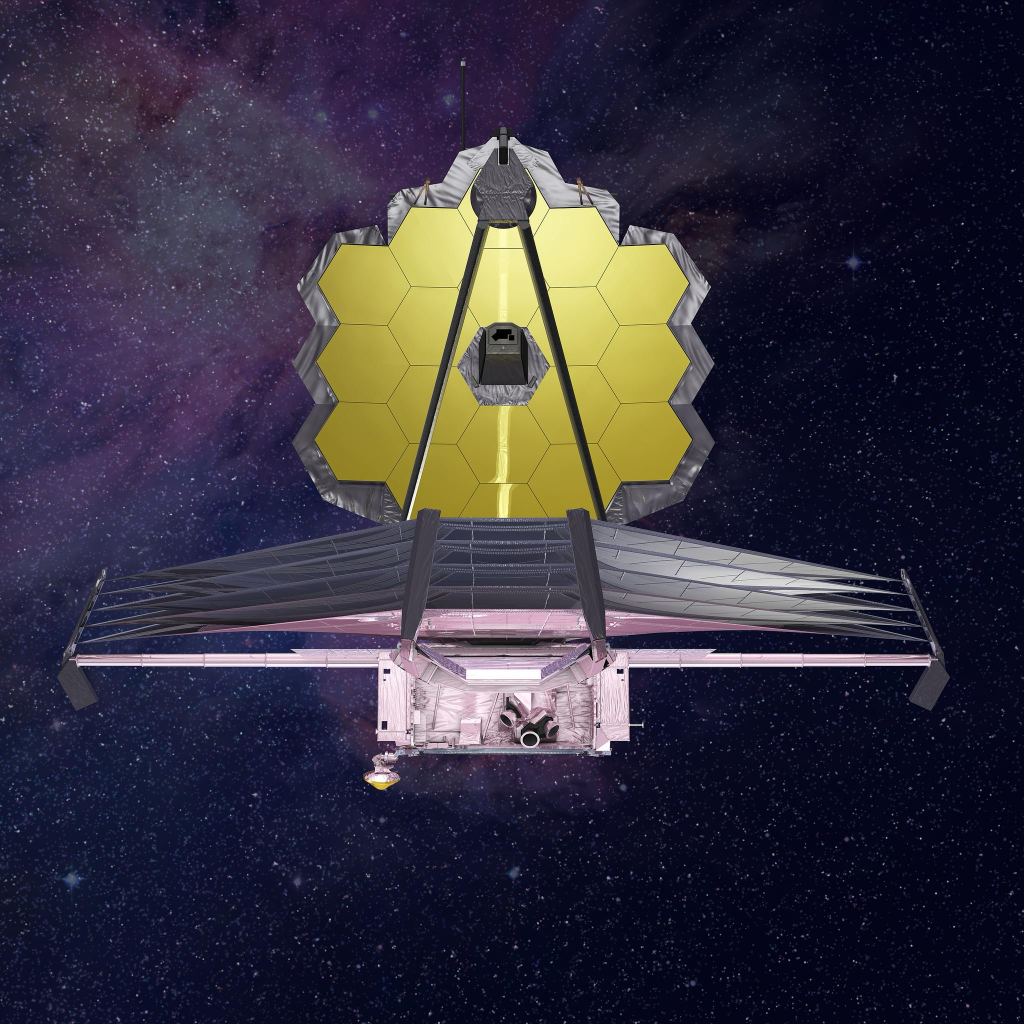
The launch of the James Webb Space Telescope marked a major leap forward in humanity’s search for life beyond Earth. Unlike previous telescopes, Webb can analyze the atmospheres of distant planets by studying the starlight that passes through them. This allows scientists to search for gases that could be associated with biological activity, such as water vapor, methane, carbon dioxide, and oxygen.
Already, Webb has provided unprecedented views of distant galaxies and intriguing data from planets orbiting other stars. While it has not discovered definitive evidence of extraterrestrial life, it is helping researchers identify worlds that may deserve closer study. Each new observation brings us one step closer to answering one of humanity’s oldest questions: Are we alone in the universe?
The Galileo Project
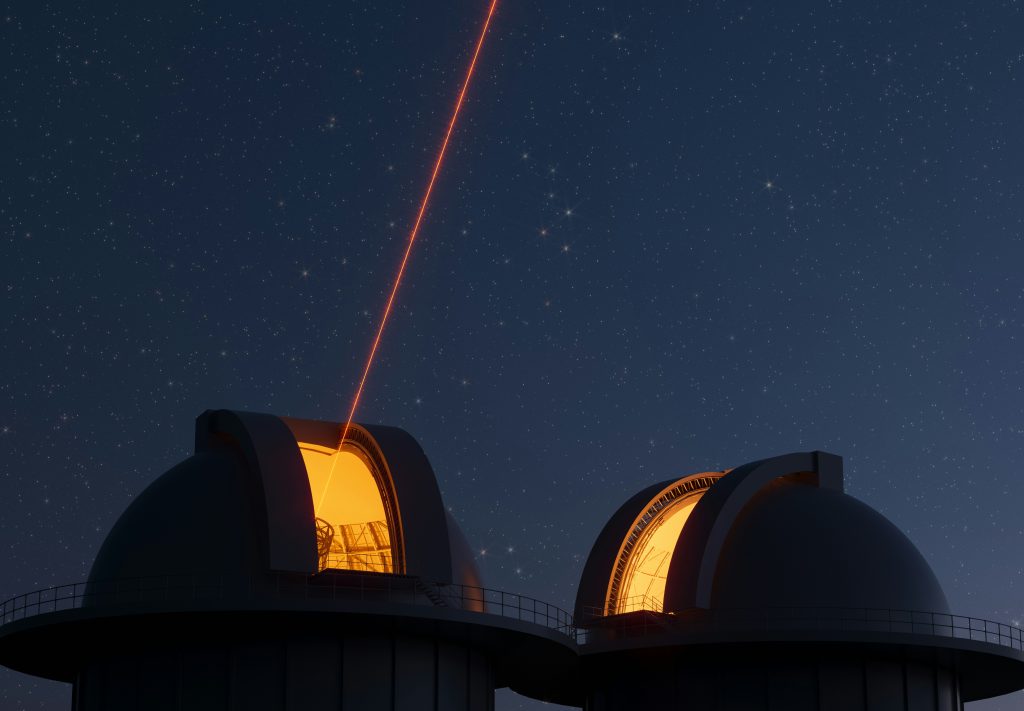
The search for intelligent life is not limited to government space agencies. One of the most ambitious efforts currently underway is the Galileo Project, a research initiative based at Harvard University. Founded by astrophysicist Avi Loeb, the project seeks to apply rigorous scientific methods to the search for extraterrestrial technological signatures.
Loeb argues that extraordinary claims should be investigated scientifically rather than dismissed outright. By combining multiple sensors with modern machine learning techniques, the Galileo Project hopes to identify rare events and determine whether they can be explained by natural phenomena, human technology, or something entirely unknown.
The project represents a broader shift in how humanity approaches one of its oldest questions. Instead of merely wondering whether intelligent life exists elsewhere in the universe, scientists are increasingly building the tools needed to search for it directly. Combined with advances in artificial intelligence, next-generation telescopes, and future exploration missions, projects like Galileo demonstrate that the search for extraterrestrial life is evolving from philosophical debate into an active scientific endeavor.
The Next Generation of Discovery
Perhaps the most important lesson from the search so far is humility. Time and again, humanity has discovered that we are not the center of the universe. Earth is not the center of the Solar System. The Solar System is not the center of the galaxy. Our galaxy is only one among countless others.
Whether we discover microbes beneath the ice of Europa, biosignatures in the atmosphere of a distant exoplanet, or evidence of an advanced civilization somewhere among the stars, the answer may arrive when we least expect it.
For now, the universe remains silent. But as our technology improves and our reach expands deeper into space, humanity continues to ask one of its oldest questions:
Where are the aliens?