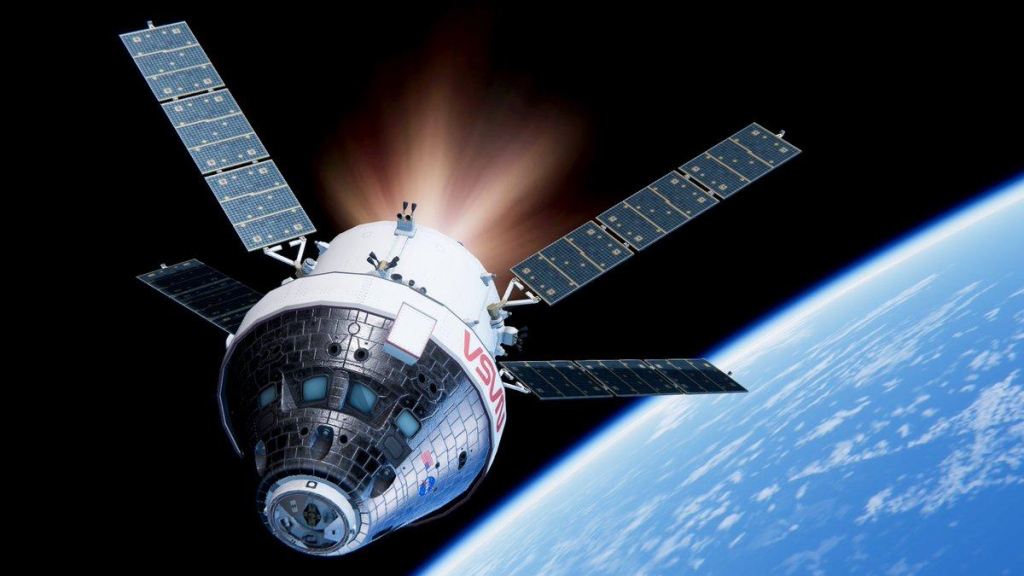
NASA’s path back to the Moon has taken another turn. Artemis III is now designed to test one of the most important—and fascinating—parts of the journey before astronauts attempt another lunar landing: docking spacecraft in orbit. NASA plans to send astronauts aboard Orion to rendezvous and dock with test versions of SpaceX’s Starship lunar lander and Blue Origin’s Blue Moon Mark 2 lander in low Earth orbit.
For me, the hardware behind these missions suddenly became a little more real during a conversation at a local brewery. I met a welder from the Arlington, Washington, area who told me he was welding components for SpaceX’s Starship. Here in western Washington, thousands of miles from the launch pads, people are helping build hardware for spacecraft designed to operate beyond Earth. It was a reminder that Artemis isn’t just a NASA program happening somewhere far away—it’s being built piece by piece by people across the country.
Artemis III will put some of that technology to the test. Orion is planned to act as the “chaser” during docking operations, approaching the commercial landers in orbit. NASA’s current plan calls for Orion to dock along the side of the Blue Moon test lander and later dock nose-to-nose with the enormous Starship test vehicle. Those demonstrations will help prepare NASA and its commercial partners for the lunar missions that follow.
What Will Artemis III Actually Do?
Artemis III begins with four astronauts thundering away from Kennedy Space Center atop NASA’s massive Space Launch System rocket. Once Orion separates from the rocket, the crew will not head toward the Moon. Instead, they will remain relatively close to Earth, entering an orbit where NASA can test something it has never attempted with the Artemis spacecraft: bringing Orion together with the enormous commercial vehicles being developed to carry future astronauts to the lunar surface.
Waiting in orbit will be test versions of SpaceX’s Starship and Blue Origin’s Blue Moon Mark 2. Think of them as two very different ships meeting another spacecraft while all three are traveling thousands of miles per hour around Earth. Orion will have to locate each vehicle, maneuver toward it and carefully close the distance. The final approach becomes a precision operation. Small thruster firings gradually bring the spacecraft together until their docking systems connect and lock.
And the two demonstrations will not be identical. NASA currently plans for Orion to approach and dock alongside Blue Moon, while the encounter with Starship calls for Orion to dock nose-to-nose with the much larger spacecraft. NASA will test navigation, communications, docking hardware and the ability of the vehicles to function together as an integrated system. These are exactly the kinds of operations future Artemis astronauts will need when they leave Orion and transfer into a lunar lander for the journey down to the Moon.
That is what makes Artemis III more than a practice flight. NASA is essentially assembling and testing pieces of its future lunar transportation system in space. If those pieces can reliably find one another, dock and operate together near Earth, NASA can take what it learns and move the same basic choreography hundreds of thousands of miles away—where the destination is no longer another test spacecraft, but the Moon.
Why Docking in Earth Orbit Matters
Testing these maneuvers close to Earth gives NASA something it will not have near the Moon: a much larger margin for error. If Orion, Starship or Blue Moon encounters a problem during rendezvous or docking, engineers can study what happened while the astronauts remain relatively close to home. Communications are faster, emergency options are better, and NASA can learn how three very different spacecraft behave together before asking a crew to depend on the same technology roughly 240,000 miles from Earth.
But docking is about much more than simply connecting two spacecraft. Orion and a lunar lander have to find each other in the vastness of space, match their orbits and relative speeds, establish communications, maneuver into exactly the right position and finally make physical contact without damaging either vehicle. Once connected, the docking mechanism has to create a secure structural connection between the spacecraft and ultimately support astronauts transferring from one vehicle to another.
That transfer is central to NASA’s new approach to exploring the Moon. Orion is the astronauts’ transportation between Earth and deep space, but it is not designed to land on the lunar surface. That job belongs to the commercial lunar landers. On a future landing mission, astronauts will leave Orion, climb aboard a lander, descend to the Moon, live and work on the surface, then launch from the Moon and rendezvous with Orion again for the journey home.
Artemis III allows NASA to rehearse one of the most complicated links in that chain while Earth is still close by. It is the orbital equivalent of making sure the bridge works before asking astronauts to cross it a quarter-million miles from home.
SpaceX Starship vs. Blue Origin Blue Moon—two radically different approaches to getting astronauts onto the Moon.
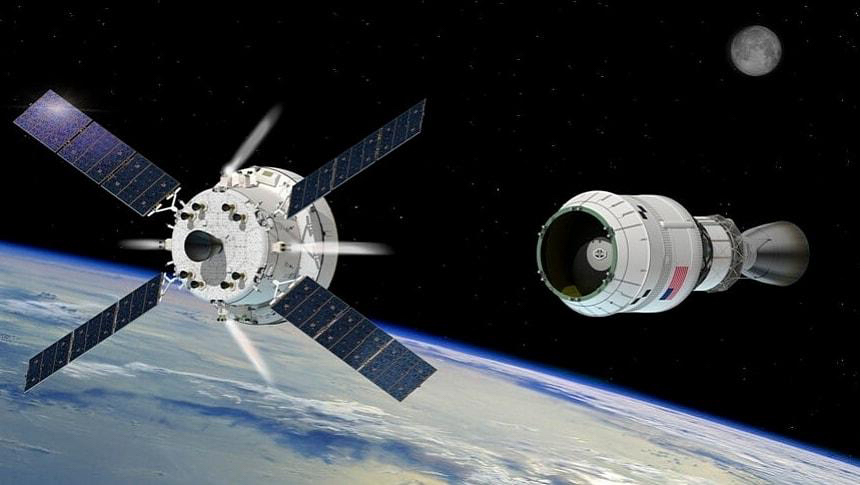
SpaceX and Blue Origin are trying to solve the same enormous problem: how do you take astronauts from lunar orbit, land them safely on the Moon, and eventually get them back to Orion? Their answers look dramatically different.
SpaceX’s solution is Starship, a towering spacecraft based on the same vehicle the company is developing for missions far beyond Earth. The lunar version, known as the Human Landing System, is designed to carry astronauts from lunar orbit down to the surface and later return them to orbit. Its enormous size could eventually allow NASA to deliver not only astronauts, but substantial amounts of equipment, supplies and scientific hardware to the Moon.
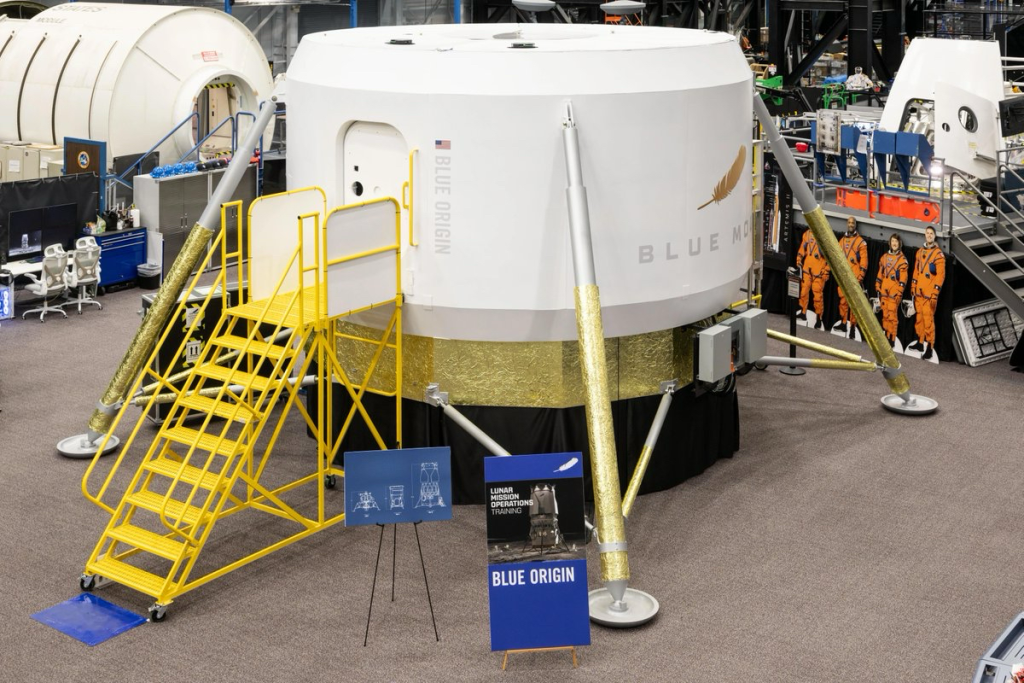
Blue Origin is taking a different approach with Blue Moon Mark 2. Rather than adapting a gigantic spacecraft originally envisioned for missions throughout the solar system, Blue Moon is being developed specifically as a lunar lander. NASA selected it to transport astronauts between lunar orbit and the surface on a future Artemis mission.
The differences between the two spacecraft are exactly what make Artemis III so interesting. Orion will have to demonstrate that NASA’s spacecraft can successfully rendezvous and dock with vehicles built by two separate companies using very different designs. The goal is bigger than proving that one spacecraft works. NASA is trying to establish a transportation system in which government and commercial spacecraft can operate together beyond Earth.
Picture the future mission: astronauts leave Earth inside Orion, travel toward the Moon, meet another spacecraft in lunar orbit, open the hatch and transfer into a vehicle built by a commercial company. That lander carries them down toward the lunar surface while Orion remains above. Days later, the astronauts launch from the Moon, rendezvous with Orion again, transfer back aboard and begin the long journey home.
Artemis III is where NASA begins proving that choreography with real astronauts and real spacecraft. Instead of betting everything on the first attempt near the Moon, NASA intends to practice the critical connections closer to Earth—then take what it learns into deep space.
The Moon Is Only the Beginning
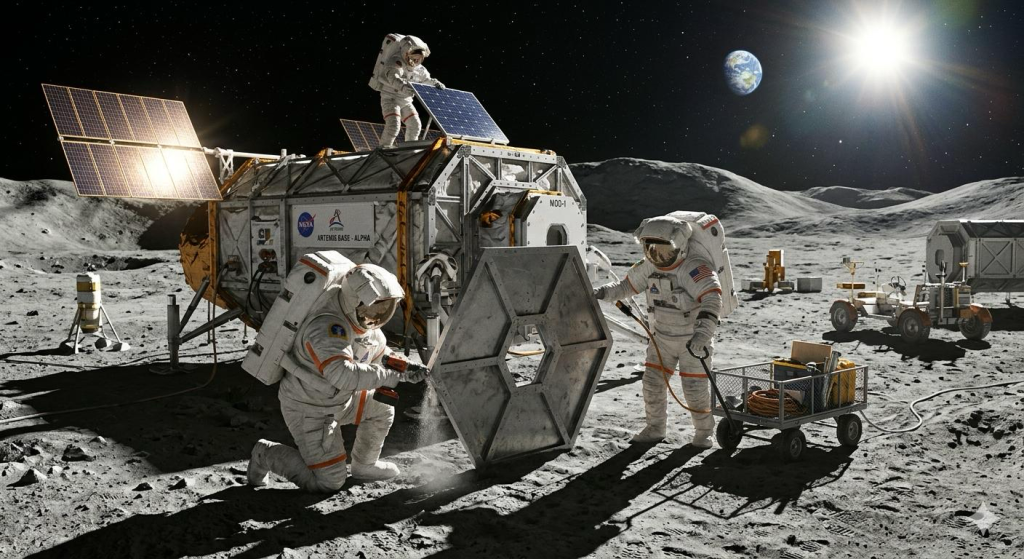
Artemis III represents a different kind of space mission. NASA is no longer developing every major spacecraft on its own. Orion, SpaceX’s Starship and Blue Origin’s Blue Moon are pieces of a larger transportation system that will have to work together if astronauts are going to establish a sustained presence on and around the Moon.
And that makes these docking demonstrations far more important than they might initially sound. Learning how independently designed spacecraft can find one another, connect and operate together in orbit could help establish the basic architecture for a new era of human exploration.
The next time you look up at the Moon, imagine the journey required to reach it: astronauts launching from Earth aboard Orion, meeting another enormous spacecraft in space, transferring through a hatch and continuing toward the lunar surface. Artemis III is designed to prove that crucial connection before NASA takes the next step.
The destination is the Moon. But Artemis III is about learning how we get there—and how we keep going.