Why Voyager, the Moon, and music all rely on patience — and what that reveals about our future
Music does not exist without time.
A melody isn’t a single sound — it’s a sequence unfolding moment by moment. Rhythm isn’t just a pattern with beats — it’s spacing. Harmony depends on timing: when tones meet, how long they hold, and when they finally resolve. Remove time from music, and it collapses into noise.
One of the most powerful elements of music isn’t sound at all — it’s silence.
The pause before a chorus.
The rest between notes.
The space where nothing happens, and anticipation quietly builds.
In that sense, Voyager is a kind of composition.
Voyager as a Long Rest in the Score of Humanity
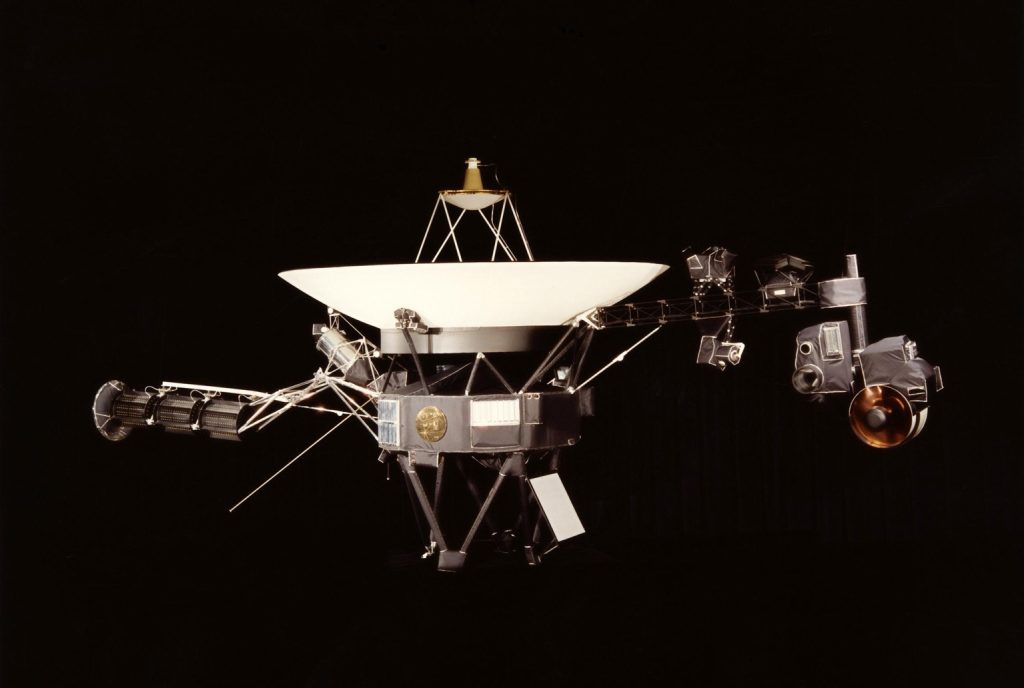
When Voyager launched in the 1970s, its mission was framed as exploration: photograph the outer planets, send data home, and eventually leave the solar system entirely. And it succeeded — revealing active volcanoes on Io (a moon of Jupiter), intricate ring systems around Saturn shaped by “shepherd moons,” nitrogen-rich Titan (with an atmosphere unlike any other moon in the solar system), violent supersonic storms on Neptune, and icy moons with geysers erupting into space.
Voyager eventually crossed the heliopause — the boundary where the Sun’s influence ends — becoming the first human-made object to enter interstellar space.
That alone would have made the mission historic.
But Voyager carried something else: a golden record filled with music, natural sounds, and voices from Earth.
That record wasn’t meant for now.
It wasn’t even meant for us.
It was meant for time.
Like a composer writing a piece knowing its most important listener may arrive centuries later, Voyager was sent forward into silence with patience built into its design.
Why Music Works Across Time
Music doesn’t require shared language, symbols, or cultural context. It works because it is structured change over time. Repetition. Variation. Tension. Release. These are patterns that exist everywhere — in physics, in biology, in orbital mechanics, and in evolution itself.
As a musician, this is what fascinates me most.
A great song doesn’t rush its listener. It allows moments to breathe. Silence gives sound its meaning. Time gives emotion its weight. A single note held too long becomes uncomfortable; released too soon, it feels incomplete. Timing is everything.
If another intelligence were to encounter the golden record and be able to extract the sound on it, they might not understand Earth — but they would understand pattern. They would hear intention. They would recognize restraint. They would hear that we are a species that learned how to wait, how to listen, and how to shape time into meaning.
Even our stories reflect this instinct. In Close Encounters of the Third Kind, humans and extraterrestrials communicate not through words, but through music — patiently exchanging tones, one phrase at a time. It’s fiction, but intellectually it’s right. Music is a conversation that unfolds over time, sending soul — not answers.
Silence Isn’t Absence — It’s Suspension
Voyager now travels in near-total silence.
Its signal grows weaker every year. One day, it will stop transmitting entirely. But silence doesn’t mean the music is gone — it means the composition hasn’t resolved yet. The record continues forward, like a sustained note held across millennia.
In music, silence is never empty.
It has power to change the next note — and what is heard and felt. This is often called a rest.
Voyager is currently resting — a long pause in the score of human history. And like any well-placed rest, its power comes from what might follow.
Odysseus Echoes the Same Idea
This idea didn’t end in the 1970s.
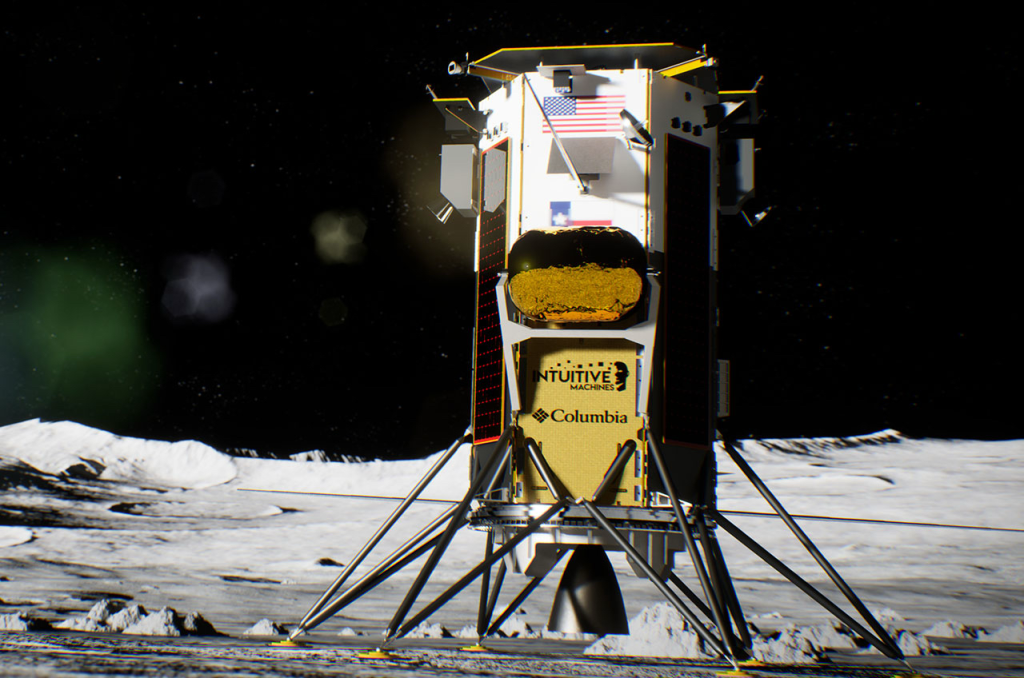
In 2024, the lunar lander Odysseus touched down on the Moon carrying a modern continuation of Voyager’s philosophy. Instead of a physical record, it delivered a digital archive of human creativity — music (approximately 25,000 songs), language, and culture — preserved in materials designed to last millions of years. Again, we chose to send art forward in time.
Odysseus doesn’t transmit this archive continuously. It simply exists. Waiting. Like sheet music left behind for a future performer. Like a melody written without knowing who will ever hear it — or when.
Maybe it becomes a museum one day.
Maybe it’s discovered centuries from now.
Maybe it waits far longer than we can imagine.
Time is the medium.
The Chord That Hasn’t Been Played Yet
The most powerful moments in music often arrive after restraint — when tension finally resolves, when harmony appears after long silence.
Voyager may drift for tens of thousands of years before meeting anything at all. But if one day its music is decoded, felt, or understood, that moment won’t just be discovery.
It will be harmony. NASA’s crescendo.
A meeting not of places — but of timing.
What This Means for What We Build Next
This is where space, music, and technology quietly converge.
Everything we create — probes, archives, software, apps — is ultimately designed to move through time. Some tools are built for immediacy. Others are built to wait. The most powerful technologies understand timing as deeply as a good composer understands rhythm.
Voyager didn’t demand attention.
Odysseus didn’t rush its audience.
They trusted time to do the work.
And increasingly, the tools we build on Earth are beginning to reflect that same philosophy — software that adapts, learns, listens, and unfolds over time rather than shouting all at once.
In the next post, I want to explore how modern apps are becoming less like static tools and more like living systems — interfaces that respond, evolve, and wait for the right moment, much like a melody waiting for its resolution.
Because whether we’re sending music into deep space or designing the next generation of technology here on Earth, the question is the same:
Do we understand time well enough to build something worth waiting for?